

Apertura: Opening of the legs, usually no bigger than your hips.
Barrida/Arrastre: A sweep of the feet.
Baldosa: Refers to the basic box step containing 6 steps.
Cabeceo/Mirada: The non-verbal way of inviting in the milonga.
Caminata: Refers to the style or manner of walking in tango.
Cortina: Meaning curtain, but it’s referring to a interlude song between tandas.
Cruce: Refers to the crossing of the legs.
Marca: meaning the lead.
Milonga: Refers to either the tango social event or the genre of music associated with it.
Milonguero(a): Milongueros are typically older dancers who are respectful of social dance floor etiquette. They are known for having a distinct personality and style.
Ocho: Literally means “eight,” but refers to a movement involving a step and a pivot, completing a figure resembling the number eight.
Ocho cortado: Refers to a “cut” ocho, where the movement is interrupted or changed mid-way.
Parallel & Cross System: In parallel, both dancers step with the opposite foot at the same time. Cross system: The dancers step with the same foot. The top row being parallel and the bottom being cross system.
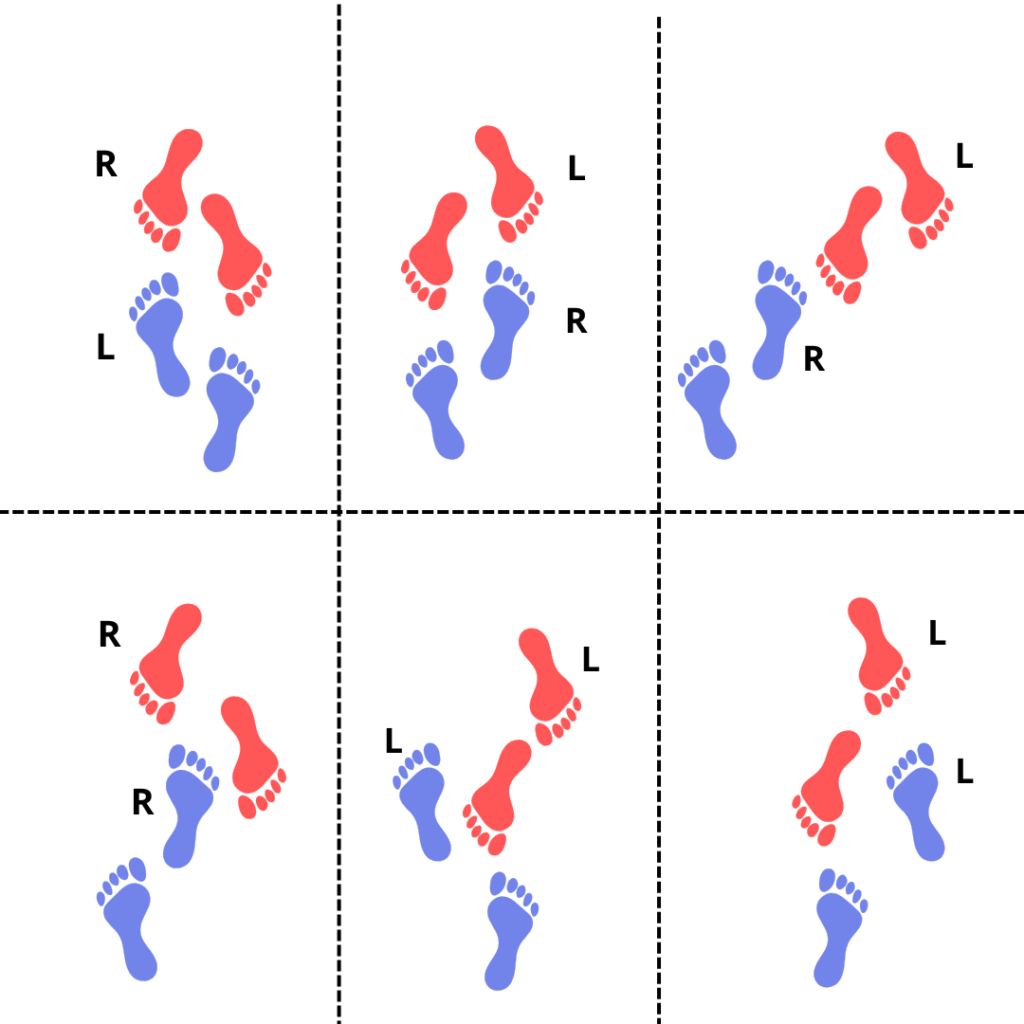
Paso al costado/salida: A side-step, usually bigger then your hips
Piso: Refers to the floor.
Presencia: A way of standing with an upright posture & confidence.
Projection: The stretching of the legs before you arrive with the weight of the torso.
Rebote / Arrepentida: Refers to a movement where the dancer does not complete the step and returns to the original position, as if “rebounding” or “repenting.”
Ronda: Refers to the circulation of the dancers on the floor, which always moves counterclockwise.
Salida básica: Refers to the 8 step basic step with a cross on number 5 for the follower, created by Petróleo.
Shadow position / Doble Frente: A form of dancing, mainly for exhibitions where the leaders dances behind the follower. (Cecilia Gonzalez & Anton Gazenbeek)
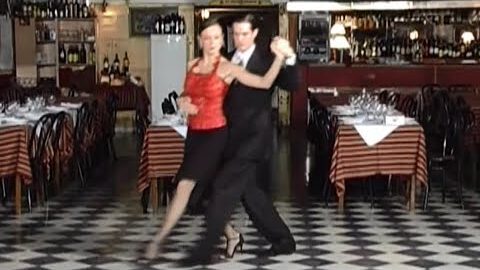
Tanda: A set of 3 or 4 songs in a milonga.
Tango Escenario: Refers to the tango danced on the stage, often for theater.
Tango Fantasía: Refers to the tango danced during exhibitions, with lots of sacadas, boleos and shadow positions.
Tango Salón: Refers to the tango danced during the “golden age of tango” in the suburbs of Buenos Aires.
Tanguero(a): A person who dedicates themselves to tango.
Verdulero: Literally means “greengrocer,” but was often used as an insult to describe dancers who lacked the elegance and refinement in their movements.