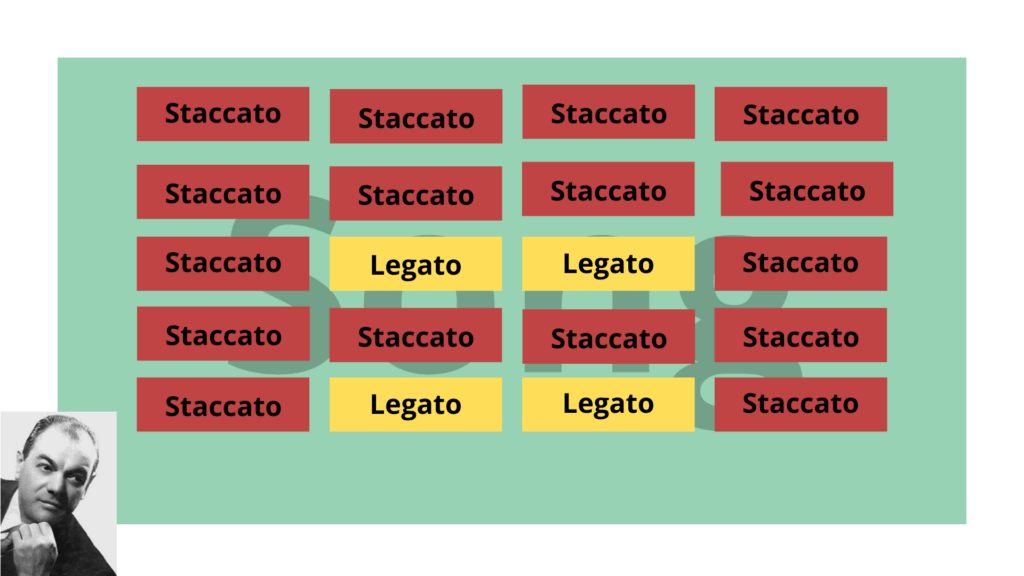
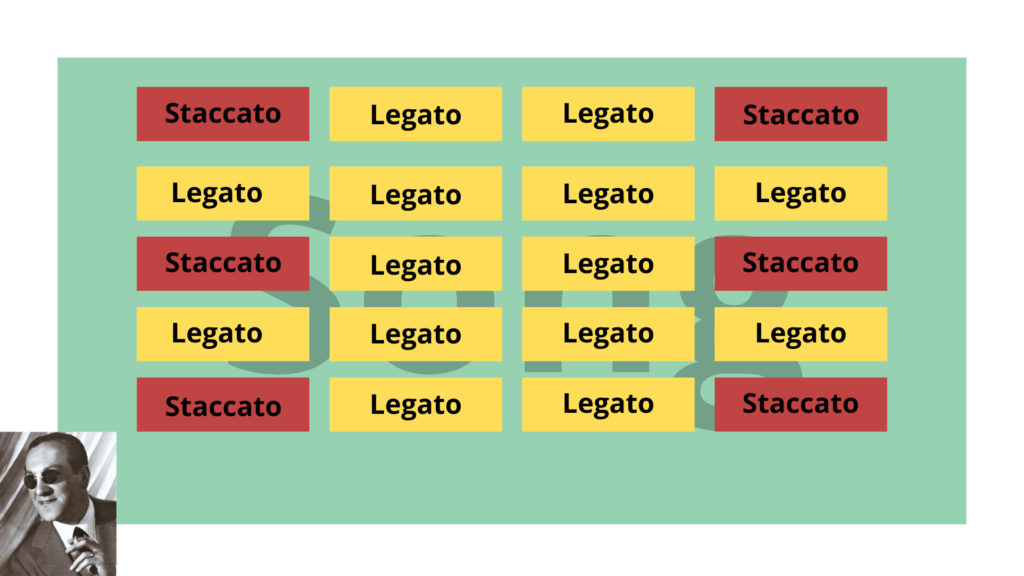
Legato means notes are played smoothly and connected, creating a flowing sound. Staccato means notes are played short and separated, creating a crisp, detached sound.
Structure of a tango
From a view from very far away a song might be simple. But if we zoom in, a song is made out of different phrases. Those phrases can be legato or seen as staccato.
Use of Legato vs Staccato
Every ochestra likes to use both elements in their music, but the degree of their use is different for example…
Generalization – Fransisco Canaro
Generalization – Carlos di Sarli
Examples of Legato vs Staccato Phrases
Nueve Puntos – Carlos Di sarli
Legato
Staccato
Legato
Legato > Staccato
Whenever you find yourself unsure whether a passage should be played legato or staccato, keep in mind that composers sometimes blend both articulations within the same line. In such cases, let the legato phrasing take priority, as it usually shapes the overall musical direction.
Trend seekers
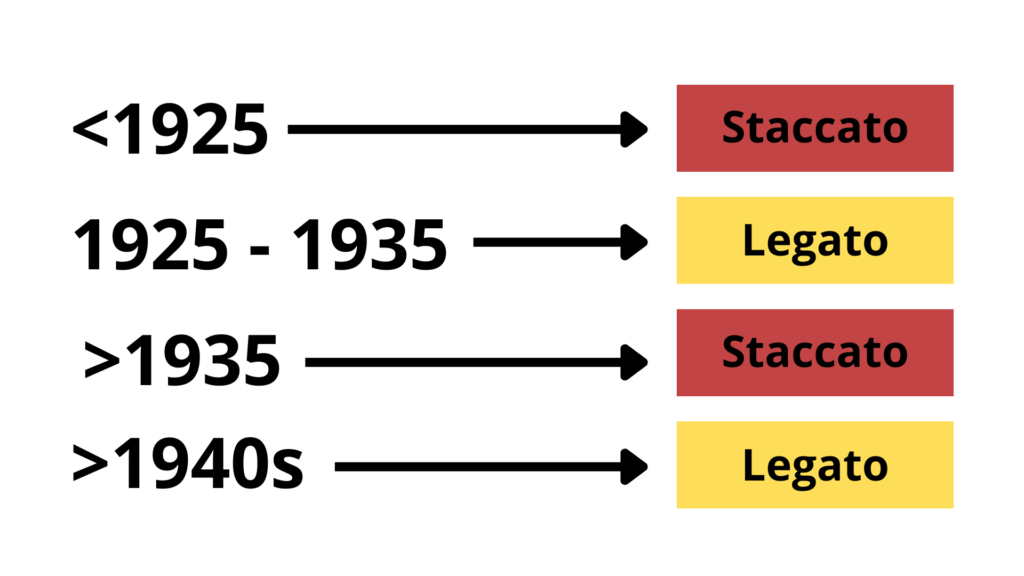
The eras in which the ochestras played, also had an influence in what was more populair with dancers and listeners. The ultimate goal of each orchestra was of course to earn money, it was a business. So trends had a very big role to play in those times.
Example of a trend seeker
Carlos di Sarli has some recordings form the 1930’s which are “mainly” legato.
Then Juan D’arienzo came with a track that put the dancers back in the ballrooms! Marking the start of the golden age of the tango. Of course the other ochestras couldn’t resist copying the staccato style of D’arienzo.
Juan D’arienzo – 1935
Carlos Di sarli – 1940 – This is a heavilly staccato inspired piece of music.Di Sarli 1950’s – During the golden age Carlos Di Sarli switched back to legato, since that was his style.